

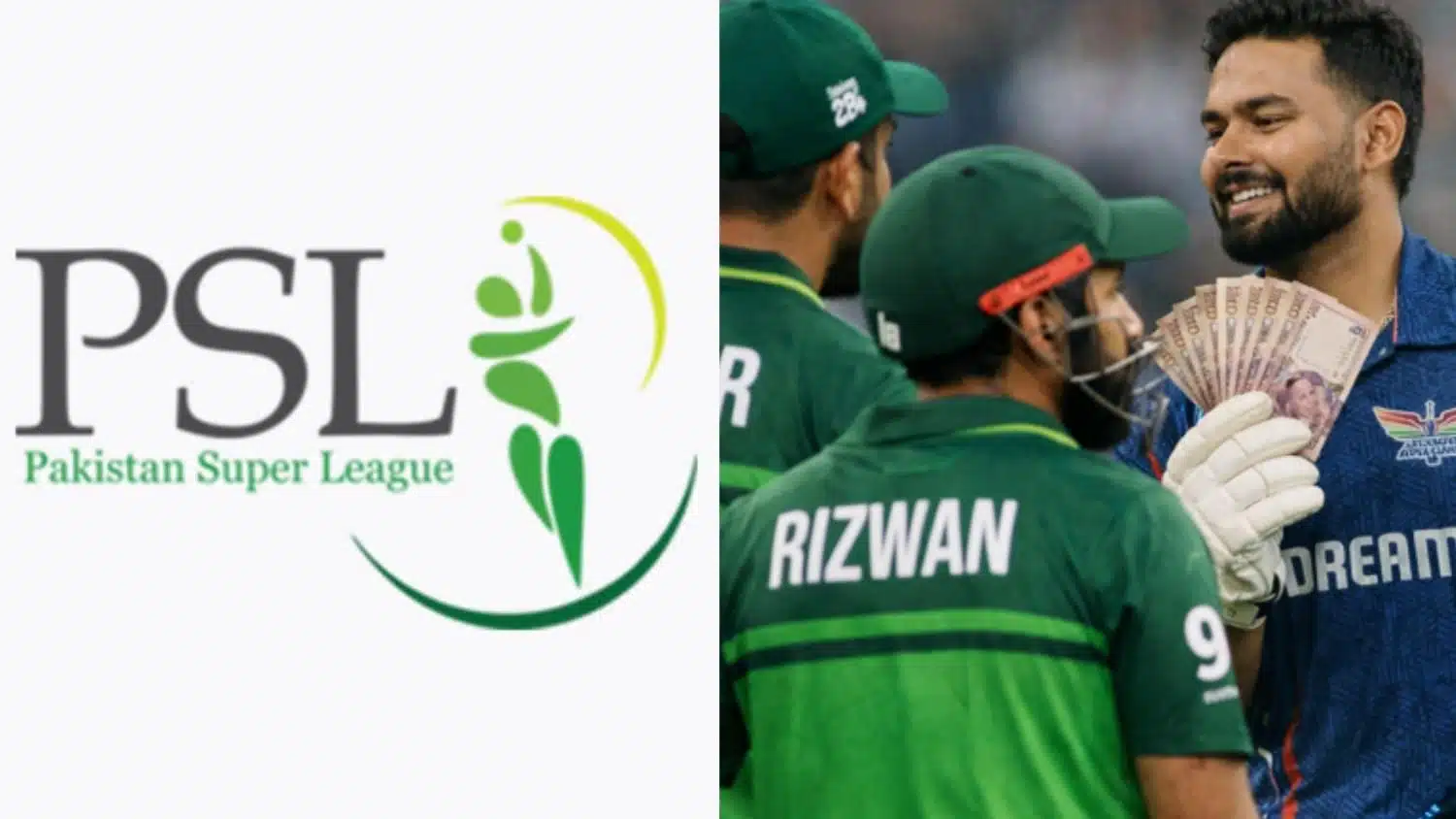
The Pakistan Super League has announced raising its salary cap to $1.6 million per team and expanding from six to eight franchises ahead of its 2026 season. For the first time in PSL history, an auction system will be introduced to sign players, replacing the traditional draft method. These changes aim to enhance competitiveness and attract top talent from Pakistan and around the world. Despite all these changes, the financial gap between PSL and IPL remains a thing to talk about.

The IPL’s Unmatched Financial Muscle
The gap becomes starkly evident when comparing individual earnings. Reports indicate that Indian wicketkeeper-batsman Rishabh Pant’s IPL salary alone could fund the complete salary cap of nearly two PSL teams. This means a single IPL player earns what two entire PSL franchises spend on their squads combined, illustrating the vast difference in financial rewards.

Despite these reforms, the financial disparity between the two leagues remains enormous. The IPL, widely recognized as the world’s richest cricket league, generates massive revenues from media rights, sponsorships, and advertisements that dwarf the PSL’s commercial income. This wealth directly translates to player earnings, where IPL salaries are several times higher than PSL compensation.
While the PSL’s increased salary cap and auction system represent progress, the league still operates on a fundamentally different economic scale. The IPL’s combination of massive viewership, lucrative broadcasting deals, and premium sponsorships creates a commercial ecosystem that the PSL cannot yet match, leaving it striving to reach that elite financial tier.
PSL New Reforms Signal Ambition
The PSL’s decision to increase the salary cap represents a significant step forward in its evolution. Under the new structure, each franchise can spend up to $1.6 million on player salaries, a notable increase from previous seasons. The introduction of an auction system marks a departure from the league’s traditional draft format, allowing player prices to be determined by market demand rather than fixed categories. PSL officials believe these reforms will make the competition more attractive to both domestic and international cricketers while creating a more dynamic marketplace for talent acquisition.
The expansion to eight teams also reflects the league’s ambition to broaden its footprint and provide more opportunities for Pakistani players to showcase their skills on a bigger stage. These structural changes are designed to strengthen the PSL’s global appeal and narrow the gap with more established T20 leagues.


